


From May 13-15, 2026, the CIBF 2026 International Battery Exhibition in Shenzhen became the focal point of the global energy industry, bringing together thousands of technology companies, battery manufacturers, testing units, and leading ESS corporations.
With the theme "Empowering the Global Green Revolution" this year's exhibition focuses on three main areas, including:
- New battery technology
- ESS (Energy Storage System)
- Comprehensive battery supply chain
The highlight of CIBF 2026 was the appearance of next-generation battery solutions such as solid-state batteries, sodium-ion batteries, and hydrogen fuel cells. These are considered potential candidates to replace traditional lithium-ion batteries in the future.
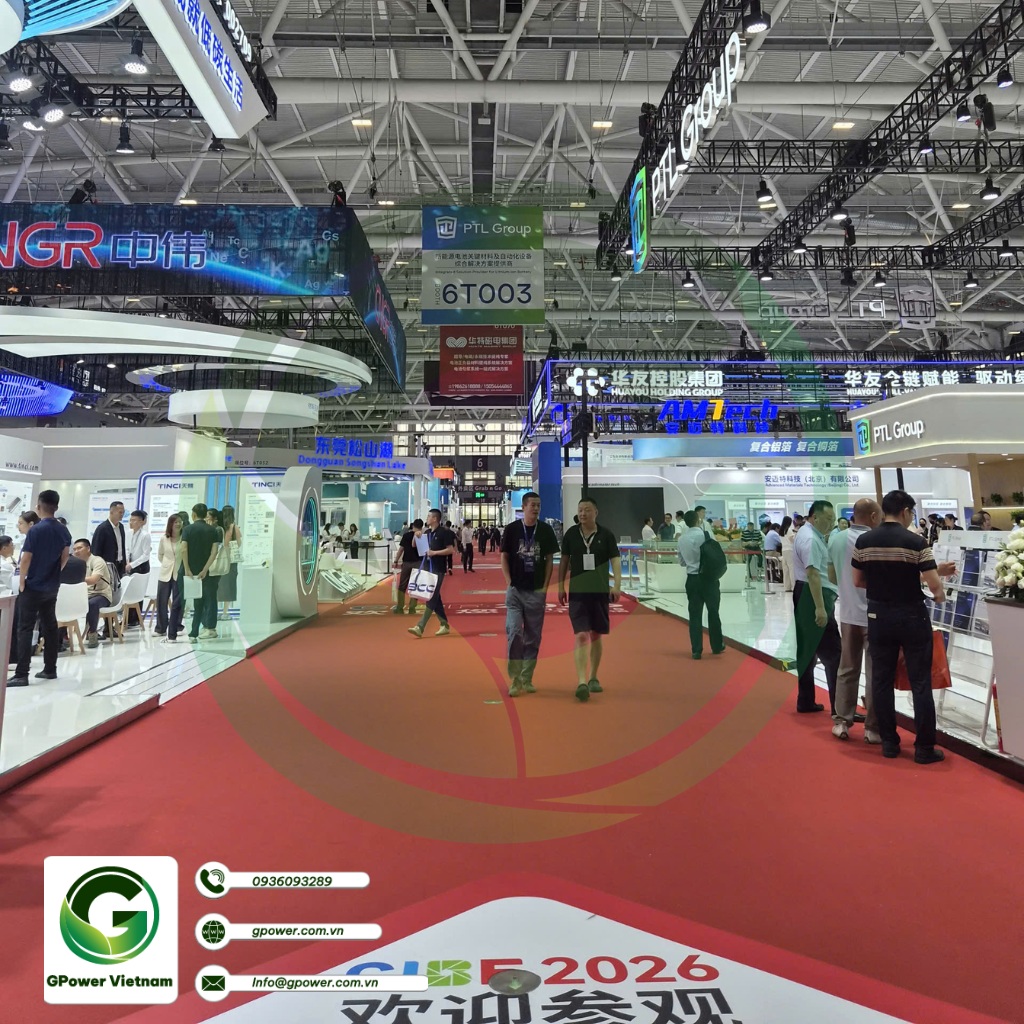
Images from CIBF 2026 in Shenzhen, May 13-15, 2026
1. New battery technology becomes a highlight at CIBF 2026.
1.1. Solid-state batteries – A major leap forward in safety and energy density.
In the high-tech exhibition area, solid-state batteries were the product line that attracted the most visitors. Unlike traditional lithium-ion batteries that use liquid electrolytes, solid-state batteries use solid electrolytes (ceramic, polymer, or sulfide), which helps to:
- Reduce the risk of fire and explosion.
- Increased energy density allows the vehicle to travel longer distances.
- Reduce charging time
- Increase battery life
Many technology companies say that solid-state batteries could help electric vehicles achieve a range of over 1,000 km on a single charge – something that current lithium-ion batteries still face limitations in.
In particular, manufacturers also demonstrated impact, vibration, and overheating test models to prove the superior safety of this technology.
1.2. Sodium-ion batteries – A cost-effective solution for the mass market.
While solid-state batteries target the high-end segment, sodium-ion batteries are seen as the solution to the cost and raw material challenges.
Sodium is much more abundant than lithium, reducing dependence on the extraction of rare minerals. The biggest advantage of sodium-ion batteries lies in their abundant supply and lower cost compared to lithium ( because sodium is readily available in sea salt) . This helps reduce pressure on resource extraction and battery production costs in the future.
In addition, sodium ions have the following advantages:
- Stable operation at low temperatures
- High safety
- Suitable for large-scale energy storage systems.
Although its energy density is not yet equal to that of lithium-ion, given its current rate of development, many experts believe that sodium-ion will quickly gain market share in the ESS and affordable electric vehicle sectors.
1.3. Hydrogen fuel cells – A long-term clean energy trend
One of the most impressive areas at the exhibition was the hydrogen fuel cell ecosystem.
The advantages of hydrogen fuel cells are their fast refueling times and near-zero emissions.
Compared to traditional rechargeable batteries, hydrogen is particularly suitable for heavy-duty vehicles or systems requiring continuous operation over extended periods.
However, the cost of hydrogen infrastructure and transportation remains a major challenge preventing widespread adoption of this technology in the short term.
2. ESS – Energy storage systems are becoming an inevitable trend.
Alongside new battery technology, ESS is also a sector receiving significant investment at CIBF 2026.
Suppliers offer a range of solutions:
- ESS industrial containers
- ESS for residential solar power
- Smart microgrid system
- AI-powered energy management solutions
- Next-generation liquid cooling technology
A notable trend is the combination of sodium-ion and solid-state batteries in ESS (Electro-Electro-Battery System) to:
- Increase safety
- Reduce operating costs.
- Extending the storage lifespan
- Supporting the stability of the renewable energy grid.
Many experts believe ESS will be a "strategic piece" in the global energy transition.
3. Battery Testing providers offer next-generation testing technology.
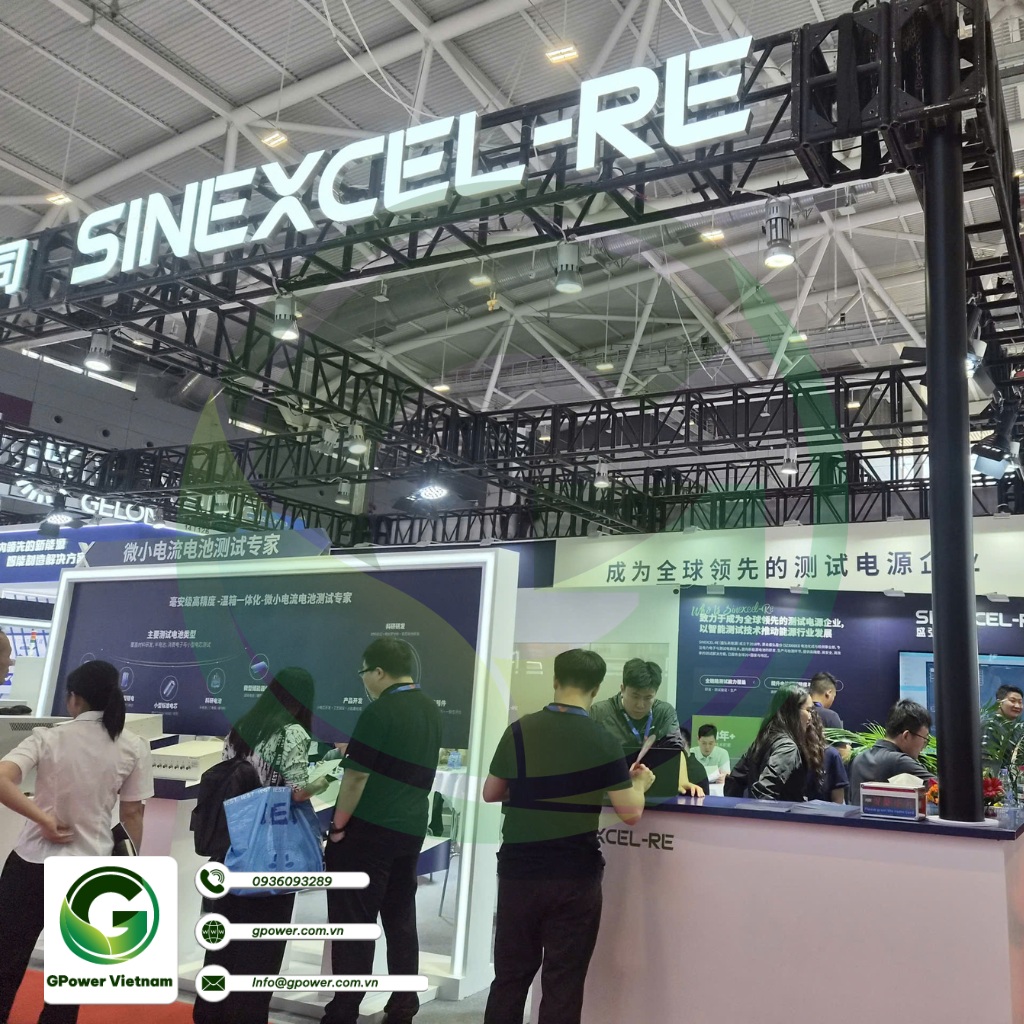
Visit the SinExcel booth.
At the CIBF Shenzhen International Battery Exhibition, the battery testing sector witnessed a dramatic transformation. New technologies are no longer limited to measuring current or voltage in the conventional way, but focus on solving the problem of optimizing mass production speed, meeting the demands of new generations of batteries (such as semi-solid and sodium batteries), and enhancing safety.
Here are some of the most groundbreaking new features demonstrated by testing companies:
- - Non-destructive X-ray testing and ultra-high-definition CT technology
- - Electrolytic leak testing without the need for a Tracer Gas indicator.
- - Integrating AI and Machine Learning for rapid life expectancy diagnosis.
- - Intelligent environmental simulation chamber for solid-state batteries and ultra-fast charging.
- - Green & Regenerative Testing
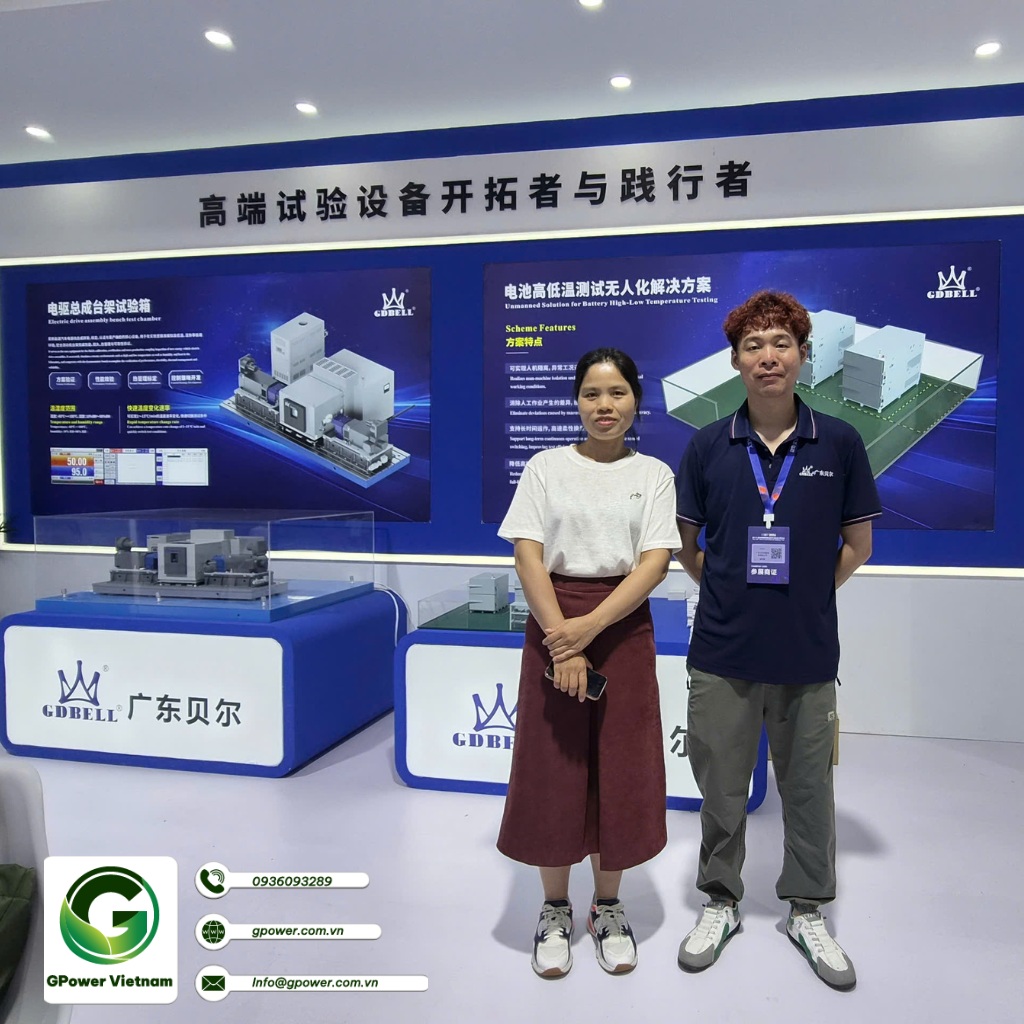
Representatives from GPower Vietnam and DGBell
4. A comprehensive battery supply chain geared towards low carbon emissions.
One topic that was frequently discussed at CIBF 2026 was building a sustainable battery supply chain.
Businesses are no longer focusing solely on battery performance but are also concerned with:
- Carbon emissions in manufacturing
- Reuse materials
- Closed-loop battery recycling
- Circular economy
Lithium-ion battery recycling models were demonstrated live, showcasing their ability to recover lithium, nickel, cobalt, copper, and aluminum.
High recycling rates help reduce reliance on natural resource extraction and limit environmental pollution.
In particular, manufacturers are moving towards a "closed-loop recycling" model, where materials from old batteries are reused to produce new batteries.
5. CIBF 2026 shows that the future of the battery industry is undergoing dramatic changes.
CIBF 2026 is not simply a technology exhibition, but also clearly reflects the shifting trends in the global energy industry.
From solid-state batteries to sodium-ion batteries to hydrogen batteries, all demonstrate a race to push beyond the limits of traditional lithium-ion batteries.
In addition, smart ESS, AI-powered battery testing, and low-carbon recycling processes are becoming key factors determining the future of the battery industry.
With the growing demand for electric vehicles, renewable energy, and electricity storage, "new battery technology" will undoubtedly continue to be a strategic keyword for the world in the years to come.


 Info@gpower.com.vn
